Your school name
10th Class Biology Full Book Paper10th Class · Biology · Punjab (PTB)
Q1. Multiple choice questions (Attempt all · 12 × 1 = 12)
What is the function of a crosome?
Regular handwashing and avoiding contaminated water help prevent:
Which nitrogenous base is found in RNA instead of the thymine found in DNA?
What is the major dietry cause of kidney stones?
If farmers mostly grow GM crops, traditional and naturally diverse varieties might become ......
The mode of transmission for Escherichia coli is:
In central Nervous system (CNS) myelinated axons form:
In the beetle example, why are brown beetles more likely to survive than green beetles?
Capillaries are the smallest blood vessels, and their walls are made of only a single layer of cells called ......
Nicotine and other chemicals in vapes increase which cardiovascular factors?
Following are the parts of male reproductive system except:
Blood vomiting can occur in severe cases of which disorder?
Q2. Short questions (Attempt any 5 of 8 · 5 × 2 = 10)
Why does oxygenated and deoxygenated blood not mix in the human heart?
Where is the liver found in the human body?
Write the disadvantages of vaping.
How do kidneys conserve water when the body faces a shortage of water?
Explain how the "lubb" and "dubb" sounds of the heart are produced.
Write a brief note on the structure of villi.
What is the role of intercostal muscles during exhalation?
How do kidneys help in maintaining homeostasis in the body?
Q3. Short questions (Attempt any 5 of 8 · 5 × 2 = 10)
What is the role of FSH in males?
Differentiate between a Chromatid and a Centromere.
What do you know about synapse and neurotransmitter?
Discuss the role of yeast in making bread.
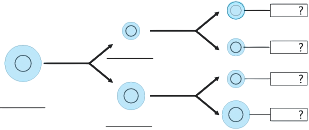
Complete the chart of oogenesis by mentioning the names of cells and number of chromosomes (2n or 1n).
Define monohybrid cross and a dihybrid cross and give an example of each.
Differentiate medulla oblongata, cerebellum and pons on the basis of their functions
Why are bacteria essential microorganisms in biotechnology?
Q4. Short questions (Attempt any 5 of 8 · 5 × 2 = 10)
Why palaeontologists study fossils?
How many basic types of diseases are there? Name them.
Which are the main sources of variations?
Define the term 'Allergy'.
Explain how the food sources on the Galapagos Islands affected the finches.
How do humans contract Aspergillosis?
What is species?
Write a note yellow fever.
Q5. Long questions (Attempt any 2 of 3 · 2 × 9 = 18)
Why is it important to maintain a healthy balance of gut bacteria?
What are vestigial structures? Explain how they provide evidence of evolution.
Define disease. Explain infectious diseases.