Your school name
1st Year Chemistry Board Pattern Paper 20261st Year · Chemistry · Punjab (PTB)
Q1. Multiple choice questions (Attempt all · 17 × 1 = 17)
The pH of 10-3mol dm-3 of an aqueous solution of H2SO4 is:
If absolute temperature of a gas is double and the pressure is reduced to one half, the volume of the gas will:
Remain unchanged
Increase four times
Reduce to

Be doubled
AgNO3 forms a precipitate with a halide ion due to formation of:
Which one of the following elements has the highest ionization energy?
The order of reaction is:
True about theoretical yield is:
London dispersion forces increase with:
Which type of equilibrium involves a change of state?
An energy profile shows a very flat region after the first peak before rising to a second, higher peak; what does this suggest about the intermediate?
The mobile source of air pollution is:
n-Butanol and diethyl ether are:
Element is typically used to dope silicon to create a p-type semiconductor:
Nitrosomonas helps in conversion of:
For the half-reaction if the concentration of
 , if the concentration of M n + ions is decreased below 1 M at 298 K, how will the actual electrode potential (E) change?
A basic buffer solution can be prepared by mixing:
Which one of the following have lowest vapour pressure at 25oC?
Halide ion that reacts with concentrated H2SO4 to release HCl gas?
Q2. Short questions (Attempt any 8 of 12 · 8 × 2 = 16)
How do you differentiate between crystalline solids and amorphous solids?
What is the n +
 rule or Wiswesser rule? Give example.
Why the elements of group VI-A have less ionization energy values than V-A?
Sketch the hybrid orbital and bond formation in PCI3, SiCI4, and NH4+.
Why do ionic compounds not possess molecular formulas?
Why does wind increase the rate of evaporation of a liquid?
How many orbitals are possible for n = 4? Show how you calculate it.
Define metals and give example?
Draw the Lewis (electron dot) structures for the following species: (i) HCN (ii)
 3
Calculate the mass in grams of 2.74 moles of KMnO4.
London dispersion forces are weaker than dipole-dipole forces. Why?
State the general order of filling orbitals up to the 4p subshell.
Q3. Short questions (Attempt any 8 of 12 · 8 × 2 = 16)
Why does changing the concentration of a substance not alter the value of the equilibrium constant?
Why electrode potential of Cu is called reduction potential?
Why is the water molecule considered amphoteric according to the Bronsted-Lowry theory? Provide equations to illustrate its behavior as both an acid and a base.
What is meant by order of reaction?
Explain why bond breaking is always an endothermic process, while bond formation is always exothermic, in the context of
 r.
The change of volume disturbs the equilibrium position for some of the gas phase reactions but not the equilibrium constant.
State the value of Avogadro's constant and Faraday's constant.
Explain the concept of a conjugate acid-base pair using a specific example.
A reaction is second order with respect to a reactant. How is the rate of reaction affected if the concentration is doubled and reduced to half?
If a reaction involves a phase change in one of the reactants or products, how must bond energy calculations be adjusted to provide a more accurate
?How can you experimentally determine if a system is at equilibrium?
What is electrolysis?
Q4. Short questions (Attempt any 6 of 9 · 6 × 2 = 12)
Why does iodine sublimate on heating instead of melting?
Give an example of a sulfur-containing fragrance compound and its application.
Write down name of the following compounds according to IUPAC-System. (i) CH2=CH-CH=CH2 (ii)CH2=C-CH2CH2CH3 (image) (iii) (CH2CH2)3CH
What are hydrocarbons and how do they enter the atmosphere?
The ionic equation for a reaction is:
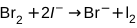 .Explain which species is oxidized in this reaction. Why?
How does V2O5 catalyze the formation of SO3?
Differentiate between open and closed chain hydrocarbons.
Why is carbon monoxide dangerous? And How is carbon dioxide a threat to the environment?
What happens when chlorine reacts with cold, dilute sodium hydroxide?
Q5. Long questions (Attempt any 3 of 5 · 3 × 8 = 24)
Three experiments that have identical conditions were performed to measure the initial rate of the reaction.

Experiment [HI] (M) Rate (M/s) 1 0.015 1.1x10⁻³ 2 0.030 4.4x10⁻³ 3 0.045 4.4x10⁻³ Write the rate law for the reaction. Find the value and units of the specific rate constant, k.
What is the standard enthaply change? Give different types of enthaply changes with their examples.
Discuss the impact of human actions on atmosphere. Explain how the burning of fossil fuels and deforestation contribute to atmosphere pollution.
Describe the free radical halogenation of methane using Cl2 as an example.
Describe the position of nitrogen in the periodic table, its physical properties and laboratory preparation. Why nitrogen is least reactive compounds with highest relative abundance?