Your school name
1st Year Chemistry Second half Book Paper1st Year · Chemistry · Punjab (PTB)
Q1. Multiple choice questions (Attempt all · 17 × 1 = 17)
For effective separation using simple distillation, the minimum required difference in boiling points between the components should be approximately:
For the half-reaction if the concentration of
 , if the concentration of M n + ions is decreased below 1 M at 298 K, how will the actual electrode potential (E) change?
The mobile source of air pollution is:
Nitrosomonas helps in conversion of:
AgNO3 forms a precipitate with a halide ion due to formation of:
The pH of 10-3mol dm-3 of an aqueous solution of H2SO4 is:
Ion gives a yellow precipitate with ammonium molybdate and nitric acid:
n-Butanol and diethyl ether are:
Which of the following techniques is an example of partition chromatography?
1 Faraday of electricity deposits:
Which atmospheric layer would a commercial airplane typically fly in to avoid weather turbulence?
The role of vanadium(V) oxide (V2O5) in the Contact Process is:
Halide ion that reacts with concentrated H2SO4 to release HCl gas?
A basic buffer solution can be prepared by mixing:
......must be neutralized before disposal.
In Ethene, each carbon atom is:
The main function of a filter medium during filtration is to:
Q2. Short questions (Attempt any 8 of 12 · 8 × 2 = 16)
Why electrode potential of Cu is called reduction potential?
Write down name of the following compounds according to IUPAC-System. (i) CH2=CH-CH=CH2 (ii)CH2=C-CH2CH2CH3 (image) (iii) (CH2CH2)3CH
Why is the water molecule considered amphoteric according to the Bronsted-Lowry theory? Provide equations to illustrate its behavior as both an acid and a base.
State the value of Avogadro's constant and Faraday's constant.
Differentiate between open and closed chain hydrocarbons.
Explain the concept of a conjugate acid-base pair using a specific example.
What is electrolysis?
Give the structures of (i) butane and isobutane, (ii) isopentane and neopentane.
Define the following with an example for each:(i) Common ion effect (ii) Acid-base Indicator
Why is the standard hydrogen electrode used in Eº value comparisons?
How can you convert ethyl bromide into ethane/alkene?
Write some applications of Buffer solutions.
Q3. Short questions (Attempt any 8 of 12 · 8 × 2 = 16)
What are hydrocarbons and how do they enter the atmosphere?
Give an example of a sulfur-containing fragrance compound and its application.
Why does iodine sublimate on heating instead of melting?
Why is carbon monoxide dangerous? And How is carbon dioxide a threat to the environment?
How does V2O5 catalyze the formation of SO3?
The ionic equation for a reaction is:
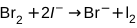 .Explain which species is oxidized in this reaction. Why?
What is the importance of using public transportation in reducing air pollution?
What percentage of sulphuric acid is used in fertilizers?
What happens when chlorine reacts with cold, dilute sodium hydroxide?
What are the environmental impacts of persistent organic pollutants (POPs)?
Why sulfur is quite unreactive at room temperature?
Why is Cl-Cl bond stronger than F-F bond despite fluorine being smaller?
Q4. Short questions (Attempt any 6 of 9 · 6 × 2 = 12)
List three practical applications of paper chromatography.
Describe the appearance of copper(II) hydroxide.
Differentiate between filtrate and residue with examples.
What are the consequences of ignoring safety instructions in a lab?
What role do locating agents play in paper chromatography?
Why must the burette be rinsed with the titrant before use?
Differentiate between simple and fractional distillation.
Why is dilute HNO3 used before adding AgNO3?
What function does filter paper serve in the filtration process?
Q5. Long questions (Attempt any 3 of 5 · 3 × 8 = 24)
Describe the free radical halogenation of methane using Cl2 as an example.
How the following acid radicals are indicated and confirmed in salt analysis: (i) CO32- (ii) Cl- (iii) NO3- (iv) SO42-
Derive the relation for the calculation of the ionization constant for acids.
Calculate the electrode potential for a zinc electrode immersed in a 0.010 mol dm-3 solution of zinc sulfate (ZnSO4) at 298 K. The standard electrode potential (E°) for
 is -0.76 V. (Gas constant, R = 8.31JK-1mol-1,Faraday constant, F = 96500C mol-1)
Explain the process of chlorination in water purification. Also explain the role of active species formed during chlorination and factors affecting chlorination. How it is regulated?