Your school name
1st Year Mathematics Board Pattern Paper 20261st Year · Mathematics · Punjab (PTB)
Q1. Multiple choice questions (Attempt all · 20 × 1 = 20)
The improper fraction can be changed into proper fraction by:
The (0,0) solution of the system a1x+b1y=0 and a2x+b2y=0 is called ......:
The derivative of
 equals ......:
Period of 2 cos 3x is equal to:


2
None of these
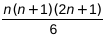
 : (or sum of first n term):
Sin 196o =......:
Angle in semi circle is:
If x-a is factor of f(x) then f(x)=0, x=a is called:
To solve absolute value quadratic function we must illuminate roots which are:
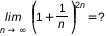
If f:
 is a function such that rang
 , then f is called a/an ...... function:
Multiplicative inverse of (1,0) is:
nCn-r is equal to:
Conditional equation 3x-1=0 is truly only is ......:
x=3
x=-3


For homogeneous linear equations, system AX=0 non-trivial solution is possible if IAI = ......:
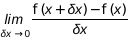 is equal to:
Period of
 its:
4
2
8
Sum of a term of G.P with first term "a" common ration 'r' is ......:
 =?
Tan

- tan

- tan
Cot
A vector with magnitude 1 is called:




Q2. Short questions (Attempt any 8 of 12 · 8 × 2 = 16)
Solve the following:

Without expansion show that:
 =0
If
 then find: z1+z2
Resolve
 into partial fractions.
Find the domain and range of
 .
Solve the following:

If
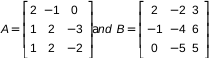 them compute A2B.
If
 then find the following and express the result into x+
 y form: z1+z2
Resolve
 into partial fraction.
Given f(x)=x3-2x2+4x-1 find: f(-2)
Find the inverse of
 . Also find its domain and range.
Without expansion show that:
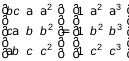
Q3. Short questions (Attempt any 8 of 12 · 8 × 2 = 16)
When the polynomial 4x4+2x3+kx2+13 is divided by x+1, the remainder is 16. Find the value of k.
A sum of Rs. 10400 is paid off in 40 installment such that each installment is Rs. 10 more than the preceding installment. Calculate the value of the first installment.
Find the maximum and minimum values of the following function:

If nPr = 120 and nCr=20, find r.
Without using the table, find the value of: cos (-240o).
Use factor theorem to find the values of a and b if -2 and 2 are the roots of the polynomial 2x3+4x2+ax+b.
Write down the nth term of the following sequence:
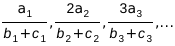
Find the maximum and minimum values of the following function:
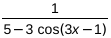
In how many ways can 5 couples sit around a round table if no two women are sitting together?
If
 are the angles of a triangle ABC, then prove that:
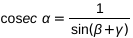
Find the remainder without performing division when f(x)=x4+x3+x2+1 is divided by x+1.
If 6,11,16 are three A.Ms between a and b, find a and b.
Q4. Short questions (Attempt any 9 of 13 · 9 × 2 = 18)
Find from principle, the derivatives of the following expressions w.r.t their respective independent variables: (3x-2)-2
Let u=3i+2j-5k, v=i-5j-k and w=-4i-j+7k. Find the following: I3v+wI.
The value of an investment grows according to the formula for continuous compounding A(t) = Poert, where Po is the initial principal, r is the annual interest rate, and t is the time rate in years. What happens to the value of the investment as
 .
Find the derivative of the following function by definition: f(x)=c
Find the moment about the point M(-2,4,6) of the force represented by
 , where coordinates of points A and B are (1,2,-3) and (3,-4,2) respectively.
The apparent brightness B(d) of a star decreases as the distance from Earth increases following the inverse square law
 , where L is the star's luminosity. Find the limit of the brightness as
 .
Find by definition, the derivatives w.r.t 'x' of the following function defined as:

Find the vector whose magnitude is 5 and is parallel to 3i+4j-k
A company weekly sales (in thousands) follow the function
 . What is the limit of S(t) as
 and what does it represent?
Find derivative of
 with respect to x.
Find a real number a so that the vectors u and v are perpendicular: u=ai+2aj-k, v=i+aj+3k
Evaluate:
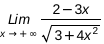
Find the derivative of
 at x=8 from the first principle.
Q5. Long questions (Attempt any 3 of 5 · 3 × 10 = 30)
An electric shop sells three types of appliances. Fans, Heaters and Ovens. The monthly sales quantities are 500 units of Fans, 300 unit of Heaters and 200 units of Ovens. The profit per unit for each appliance is Rs 500 for Fans, Rs. 400 for Heater and Rs 2,000 for ovens.Calculate the total monthly profit using vector operations.
Find the maximum and minimum point by sketching the following quadratic function. Also find their domain and range:

Evaluate:
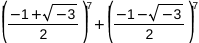
Solve the following system of linear equation by matrix inversion method:

Find the sum of the series 13+33+53+... to n terms.