Your school name
2nd Year Chemistry Chapter 3 Test2nd Year · Chemistry · Punjab (PTB)
Q1. Multiple choice questions (Attempt all · 10 × 1 = 10)
Chirality is also commonly referred to as:
Which of the following compounds has no functional group?
What type of light has a single wavelength and vibrates only in one plane?
What is the pathway adopted by a chemical reaction showing bond breaking and making called?
Which instrument is used to identify and measure the optical activity of a compound?
Which feature is critical to determine the safety and efficacy of synthetic pharmaceutical products?
What are the two main types of reaction mechanisms?
If a molecule contains more than one chiral atom, it:
"Bond order" in a functional group refers to the:
Elimination reactions are explicitly regarded as the reverse of:
Q2. Short questions (Attempt any 6 of 8 · 6 × 2 = 12)
Draw the structure of the following: 3-methylpentanal
What is thalidomide?
Define free radicals with examples.
What are isomers? Define isomerism.
Deduce the empirical and molecular formulae of the following compound:
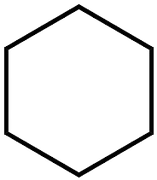
Write down the IUPAC name of nitroalkanes with its functional group.
Draw the structure of the following: 2-methylbutanal
Write down the IUPAC name of esters with its functional group.
Q3. Long questions (Attempt any 2 of 3 · 2 × 4 = 8)
Classify hydrocarbons on the basis of their carbon skeleton.
What is a functional group? Explain the factors that determine the types of organic compounds. Also discuss the effect of functional groups on the physical properties of organic compounds.
Describe the different types of formulae used to represent organic molecules.