Your school name
2nd Year Mathematics Board Pattern Paper 20262nd Year · Mathematics · Punjab (PTB)
Q1. Multiple choice questions (Attempt all · 20 × 1 = 20)
What additional insight does the graphical method provide?
When finding the global extrema of a function on a closed interval [a,b], at which points should you first evaluate the function?
A scalar function assigns a ...... to each point in its domain.
Which pair of physical quantities consists entirely of scalar quantities?
If y=cx-1. then its corresponding differential equation is:
x
 =1+y
- =x+y
x
=y-1- =cy
The value of a definite integral is always a:
The separate linear equations for the pair of lines
 are:
The domain of the inverse function f-1 is the ....... of f.
The logarithmic function y=loga x is continuous for:
During the derivation of the standard equation of a horizontal ellipse, what is the defined algebraic relationship between constants a,b and c?
In the field of cryptography, nonlinear equations play an important role in designing:
What do the x-coordinates of the intersection points give?
Find
for the parametric equations x=sin2 t and y= cos 2t:- =-2
- =2
- = - tan t
- =- 4sint cot t
Vector-valued functions are useful in:
Which branch of mechanics describes the motion of objects without considering the causes of motion?
Inflation in economics means that the price of goods is:
What is the primary objective of using a trigonometric substitution in integration?
The point where all three medians of a triangle intersect each other is called the:
Trigonometric functions are generally not one-to-one on their entire domains because they are:
A sound has an intensity of
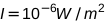 and a reference intensity of
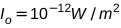 Find the sound level in decibels (dB):
Q2. Short questions (Attempt any 8 of 12 · 8 × 2 = 16)
Using the second derivative test, find local extreme values of the following function:

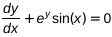
Write the order and degree (if ddefined) of the following differential equation:
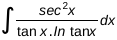
Evaluate the following integrals:
Is the following function is transcendental?

Find
 if
 .
Solve the initial value problem:

A patient receives an IV bolus dose of a drug. The concentration in the blood is modeled by
 where t is the time in hours since that does was taken. the minimum effective concentraction (MEC) is 3 mg/L. The drug is considered effective if total AUC in a 24-hour period is at least 150 mg-h/L. Find the time T (in hours) when the concentration reaches the MEC.
Define the term "Shifting of Graphs".
Find
 if:

A cup of coffee is served at
 in a room where the temperature is
 . After 10 minutes the coffee cools to
 . Find the temperature of the coffee after 20 minutes.
Evaluate the following:

Solve the equation:

Q3. Short questions (Attempt any 8 of 12 · 8 × 2 = 16)
Find the equations of the circles passing through the points A(3,4) and B(3,-4) and touching the line x+2y+9=0.
The electrical activity of the heart is represented by a variable x, which measures the signal strength of the heartbeat. At steady-state, the signal satisfies the nonlinear equation:

Define analytical geometry.
The motion of a robotic arm moving along a straight track is described by the velocity function:
 where v(t) is in meters per second and t is the time in seconds, valid for
 . Find the distance travelled by the arm.
An ellipse has the following properties: The centre is at the point (3,-2). Find the standard equation of this ellipse.
Find the real roots of the following functions correct to two decimal places using the graphical method, by finding some interval of sign change.

Write down an equation of the straight line which cuts the x-axis at (3,0) and y-axis (0,-6).
A ball is thrown vertically upward with a velocity of 20 m/s. Find, the maximum height reached, and the time taken to return to the thrower's hand.
Find the equations of the tangent and normal to the circles:
 .
Find the real roots of nonlinear equations using the Newton-Raphson method.
 accurate to 4 decimal places.
Write the practical applications of analytical geometry.
A ball is thrown vertically upward with a speed of 20 m/s. Find the maximum height attained an the time to reach the maximum height.
Q4. Short questions (Attempt any 9 of 13 · 9 × 2 = 18)
Find the Find the domain and range of the following vector-valued functions:
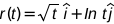
Prove the following:

A radio tower stands on flat ground with a small antenna mounted at its top. From a point 50 meters away from the base of the tower. The antenna subtends the same angle as a 1 meter vertical rod placed at the base of the tower. The total height of the tower and antenna is 10 meters.
(a) Find the height of the tower (without the antenna).
(b) Calculate the subtended angle.
Given
 , construct r(t).
Prove that
 .
Solve the following trigonometric eqautions:

Find the first-order derivatives of the following vector-valued functions with respect to t.

Find the domain of the following functions:
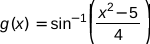
Solve the following trigonometric eqautions:
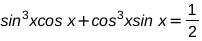
A Ferris wheel of radius 20 m rotates with an angular speed of 0.2 rad/sec.
(a) Construct its position vector r(t)
(b) Find the passenger's velocity at t =10sec
(c) Show that the acceleration is centripetal (toward the center)Without using calculator find the value of the following:
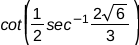
A projectile is launched from the ground with an initial velocity
 30m/s. The range R of the projectile is given by the formula
 , where
 is the launch angle to the horizontal
 is the acceleration due to gravity.
(a) Find the angle
(in degrees) required for the projectile to hit a target exactly 80 meters away.(b) If the maximum range achievable is
 determine the angle & that gives the maximum range. Justify your answer mathematically.
Find the first-order derivatives of the following vector-valued functions with respect to t.
