Your school name
1st Year Chemistry 1st Quarter Book Paper1st Year · Chemistry · Punjab (PTB)
Q1. Multiple choice questions (Attempt all · 12 × 1 = 12)
London dispersion forces increase with:
Which one of the following elements has the highest ionization energy?
True about theoretical yield is:
Element is typically used to dope silicon to create a p-type semiconductor:
In VSEPR, lone pair-lone pair repulsion is:
Which property increases as you go down a group in the periodic table?
Which of the following gases will occupy the same volume at STP if the masses are equal?
Ionization energy for

Species has the highest bond order is:
Which set of the following conditions results in higher ionization energy?
Equation of water formation is given as:
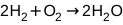 moles of hydrogen involve:
Incorrect orders with respect to relative energy is:
Q2. Short questions (Attempt any 8 of 12 · 8 × 2 = 16)
Why do ionic compounds not possess molecular formulas?
Sketch the hybrid orbital and bond formation in PCI3, SiCI4, and NH4+.
What is the n +
 rule or Wiswesser rule? Give example.
Why the elements of group VI-A have less ionization energy values than V-A?
Calculate the mass in grams of 2.74 moles of KMnO4.
Draw the Lewis (electron dot) structures for the following species: (i) HCN (ii)
 3
How many orbitals are possible for n = 4? Show how you calculate it.
Define metals and give example?
Why does dilution decrease molarity but not the number of moles of solute?
Write the molecular orbital configuration for C2.
State the general order of filling orbitals up to the 4p subshell.
What is 1st ionization energy? Give an example.
Q3. Long questions (Attempt any 3 of 4 · 3 × 4 = 12)
Discuss the formation of F2 molecule in the light of Lewis concept, VBT, and MOT.
Define ionization energy. Discuss the factors affecting and periodic trends of ionization energy.
A solution of sodium hydroxide (NaOH) is prepared by dissolving 2.00 g of solid sodium hydroxide in water to make a final volume of 250 cm3. (i) Determine the molar mass of sodium hydroxide.(ii)Calculate the number of moles of sodium hydroxide used.(iii) Calculate the concentration of the sodium hydroxide solution in mol dm-3.(iv)If more water is added to the above solution to raise the volume of solution to 500 cm3, what would be the concentration now?
What are quantum numbers? Describe briefly principal and spin quantum numbers.