Your school name
1st Year Chemistry 4th Quarter Book Paper1st Year · Chemistry · Punjab (PTB)
Q1. Multiple choice questions (Attempt all · 12 × 1 = 12)
The mobile source of air pollution is:
Ion gives a yellow precipitate with ammonium molybdate and nitric acid:
AgNO3 forms a precipitate with a halide ion due to formation of:
For effective separation using simple distillation, the minimum required difference in boiling points between the components should be approximately:
Which atmospheric layer would a commercial airplane typically fly in to avoid weather turbulence?
......must be neutralized before disposal.
Halide ion that reacts with concentrated H2SO4 to release HCl gas?
Which of the following techniques is an example of partition chromatography?
CFCs are harmful to the environment because of:
A fire hazard in the lab may occur due to:
Which silver halide dissolves only in concentrated ammonia?
The main function of a filter medium during filtration is to:
Q2. Short questions (Attempt any 8 of 12 · 8 × 2 = 16)
Why does iodine sublimate on heating instead of melting?
List three practical applications of paper chromatography.
Describe the appearance of copper(II) hydroxide.
What are hydrocarbons and how do they enter the atmosphere?
The ionic equation for a reaction is:
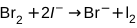 .Explain which species is oxidized in this reaction. Why?
Differentiate between filtrate and residue with examples.
What are the consequences of ignoring safety instructions in a lab?
Why is carbon monoxide dangerous? And How is carbon dioxide a threat to the environment?
What happens when chlorine reacts with cold, dilute sodium hydroxide?
What role do locating agents play in paper chromatography?
Why must the burette be rinsed with the titrant before use?
What is the importance of using public transportation in reducing air pollution?
Q3. Long questions (Attempt any 3 of 4 · 3 × 4 = 12)
Explain the process of chlorination in water purification. Also explain the role of active species formed during chlorination and factors affecting chlorination. How it is regulated?
How the following acid radicals are indicated and confirmed in salt analysis: (i) CO32- (ii) Cl- (iii) NO3- (iv) SO42-
Describe the criterion to choose the suitable solvent in the process of crystallization.
Discuss the impact of human actions on atmosphere. Explain how the burning of fossil fuels and deforestation contribute to atmosphere pollution.