Your school name
2nd Year Mathematics First half Book Paper2nd Year · Mathematics · Punjab (PTB)
Q1. Multiple choice questions (Attempt all · 20 × 1 = 20)
If y=cx-1. then its corresponding differential equation is:
x
 =1+y
- =x+y
x
=y-1- =cy
The logarithmic function y=loga x is continuous for:
During the derivation of the standard equation of a horizontal ellipse, what is the defined algebraic relationship between constants a,b and c?
The separate linear equations for the pair of lines
 are:
When finding the global extrema of a function on a closed interval [a,b], at which points should you first evaluate the function?
The value of a definite integral is always a:
Inflation in economics means that the price of goods is:
A sound has an intensity of
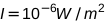 and a reference intensity of
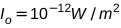 Find the sound level in decibels (dB):
According to Kepler's first law, the orbits of the planets in the solar system follow which geometric shape?
The point where all three medians of a triangle intersect each other is called the:
Find
for the parametric equations x=sin2 t and y= cos 2t:- =-2
- =2
- = - tan t
- =- 4sint cot t
What is the primary objective of using a trigonometric substitution in integration?
The differential equation
=ex-y is:Which of the following simplifies to sech2 x?
For the elliptical flower bed with a major axis of 10 m and minor axis of 6 m, what is its semi-major axis (a) and semi-minor axis (b)?
Who first developed analytical geometry in the 17th century?
Differentiation will be applied to identify which behavior of functions?
The rule that corresponds to the Product Rule for differentiation is called:
A differential equation of degree 1 is specifically called a:
The modulus or absolute value of any real number is always:
Q2. Short questions (Attempt any 8 of 12 · 8 × 2 = 16)
Using the second derivative test, find local extreme values of the following function:

Is the following function is transcendental?

Find
 if
 .
Define the term "Shifting of Graphs".
Find
 if:

Solve the equation:

Derive the formula for the derivative of the following function w.r.t. x: sec x
Let
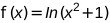 . Find the function obtained after: a vertical stretch by factor 2.
Find the linear approximation of the following function at the given points:

Is the following function is algebraic?

What are higher-order derivatives?
Let
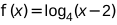 : Verify graphically that the graphs of f(x) and Let
 are symmetric about the line y=x.
Q3. Short questions (Attempt any 8 of 12 · 8 × 2 = 16)
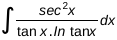
Evaluate the following integrals:
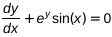
Write the order and degree (if ddefined) of the following differential equation:
A patient receives an IV bolus dose of a drug. The concentration in the blood is modeled by
 where t is the time in hours since that does was taken. the minimum effective concentraction (MEC) is 3 mg/L. The drug is considered effective if total AUC in a 24-hour period is at least 150 mg-h/L. Find the time T (in hours) when the concentration reaches the MEC.
Solve the initial value problem:

Evaluate the following:

A cup of coffee is served at
 in a room where the temperature is
 . After 10 minutes the coffee cools to
 . Find the temperature of the coffee after 20 minutes.
A patient is given an intravenous dose oof an antibiotic. The concentration in the bloodstream over time is modeled by:
 where t is an hours. Find the total drug exposure (AUC) from t=0 to t=6 hours.
A radioactive isotopes has a half-life of 12 hours. The initial mass is 160 grams. How much mass will remain after 36 hours?
Evaluate the following integrals: Evaluate:

Find the general solution of the differential equation:

Evaluate

Name any three real-life situations that can be modeled using first-order differential equations.
Q4. Short questions (Attempt any 9 of 13 · 9 × 2 = 18)
Define analytical geometry.
Find the equations of the circles passing through the points A(3,4) and B(3,-4) and touching the line x+2y+9=0.
Write down an equation of the straight line which cuts the x-axis at (3,0) and y-axis (0,-6).
An ellipse has the following properties: The centre is at the point (3,-2). Find the standard equation of this ellipse.
Write the practical applications of analytical geometry.
Find the equations of the tangent and normal to the circles:
 .
Triangle ABC has vertices A(2,3), B(4,5) and C(-2,7). Find the equations of medians of the triangle ABC.
A landscaper wants to create an elliptical flower bed with a major axis of 10 meters and a minor axis of 6 meters. Using the gardener's method, two stakes are placed at the foci, and a loop of string is stretched around them to trace the ellipse: (a) How far apart should the two stakes be placed? (b) What should be the total length of the string loop?
The vertices of
 are P(1,2), Q(5,-6) and R(7,-2). Find the equation of all three medians.
Find the eccentricity of the hyperbola whose asymptotes are perpendicular.
Convert the following equation into: x-2y+4=0 (i) Slope intercept form (ii) Two point form (iii) Intercept form (iv) Point slope form (v) Normal form (vi) Symmetric form.
Find an equation of the ellipse with foci (2,1), (2,7) major axis of length 10 and sketch its graph.
Convert the following equation into: 4x+5y-20=0 (i) Slope intercept form (ii) Two point form (iii) Intercept form (iv) Point slope form (v) Normal form (vi) Symmetric form.