Your school name
2nd Year Mathematics Second half Book Paper2nd Year · Mathematics · Punjab (PTB)
Q1. Multiple choice questions (Attempt all · 20 × 1 = 20)
Which pair of physical quantities consists entirely of scalar quantities?
A scalar function assigns a ...... to each point in its domain.
The domain of the inverse function f-1 is the ....... of f.
In the field of cryptography, nonlinear equations play an important role in designing:
What additional insight does the graphical method provide?
Which branch of mechanics describes the motion of objects without considering the causes of motion?
Vector-valued functions are useful in:
Trigonometric functions are generally not one-to-one on their entire domains because they are:
Geometrically, the straight line drawn through the points (a, f(a)) and (b, f(b)) in the Regula-Falsi method is called a:
What do the x-coordinates of the intersection points give?
A particle is projected vertically upwards with a velocity of 100 m/s, and another is let fall from a height of 200 m at the same time. At what height from the ground will they meet? (take g=9.8 m/s2)
Vector-valued functions can be used to model:
The inverse of sin x is written as:
For the equation
 what is the functional value f(1) using radian mode?
If one period is added repeatedly to a solution, we obtain:
A particle starts from rest and accelerates uniformly to attain a velocity of 30 km/h in (5 seconds. Find the distance travelled by the particle in the last three seconds.
Which of the following mathematical functions is classified as a scalar function?
If y= sin-1 x, then:
Geometrically, the Newton-Raphson method finds the next root approximation by extending what line from the current curve point to the x-axis?
What does the graphical solution of a trigonometric equation involve?
Q2. Short questions (Attempt any 8 of 12 · 8 × 2 = 16)
The electrical activity of the heart is represented by a variable x, which measures the signal strength of the heartbeat. At steady-state, the signal satisfies the nonlinear equation:

The motion of a robotic arm moving along a straight track is described by the velocity function:
 where v(t) is in meters per second and t is the time in seconds, valid for
 . Find the distance travelled by the arm.
Find the real roots of the following functions correct to two decimal places using the graphical method, by finding some interval of sign change.

A ball is thrown vertically upward with a velocity of 20 m/s. Find, the maximum height reached, and the time taken to return to the thrower's hand.
Find the real roots of nonlinear equations using the Newton-Raphson method.
 accurate to 4 decimal places.
A ball is thrown vertically upward with a speed of 20 m/s. Find the maximum height attained an the time to reach the maximum height.
Find the real roots of the following functions correct to two decimal places using the graphical method, within the specified interval of sign change.

A cyclist rides in a straight line for 20 minutes. He then stops and waits for 30 minutes, after which he return in a straight line tio the starting point in 10 minutes. (image) shows the displacement time graph for his journey. (a) calculate the average velocity for each stage of the journey in km/h. (b) Calculate the average velocity for the whole journey. (c) Find the average speed for the whole journey.
In a nonlinear LC circuit, the equilibrium charge q on the capacitor satisfies q3-4q+2=0. Find the equilibrium values of charge stored on the capacitor lying in the interval [0, 1] using Regula-Falsi method accurate to three decimal places.
A car accelerates from 10 m/s to 30 m/s in 4 seconds. Find the distance covered during this time.
In a certain chemical reaction, the concentration of a substance at equilibrium is governed by the relation
 , where x is the equilibrium concentration (in moles per liter). Use bisection method to find the positive equilibrium concentration of the substance accurate to two decimal places.
(image) is the velocity time graph for a cyclist travelling in a straight line. (The time is in minutes and velocity is in meters per minute). (a) Calculate te total displacement of the cyclist from his starting position at the end of the 12 minute. (b) Determine the uniform deceleration during the final 4 minutes of motion.
Q3. Short questions (Attempt any 8 of 12 · 8 × 2 = 16)
A radio tower stands on flat ground with a small antenna mounted at its top. From a point 50 meters away from the base of the tower. The antenna subtends the same angle as a 1 meter vertical rod placed at the base of the tower. The total height of the tower and antenna is 10 meters.
(a) Find the height of the tower (without the antenna).
(b) Calculate the subtended angle.
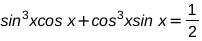
Prove the following:

Solve the following trigonometric eqautions:

Prove that
 .
Solve the following trigonometric eqautions:
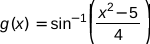
Find the domain of the following functions:
A projectile is launched from the ground with an initial velocity
 30m/s. The range R of the projectile is given by the formula
 , where
 is the launch angle to the horizontal
 is the acceleration due to gravity.
(a) Find the angle
(in degrees) required for the projectile to hit a target exactly 80 meters away.(b) If the maximum range achievable is
 determine the angle & that gives the maximum range. Justify your answer mathematically.
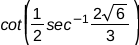
Without using calculator find the value of the following:
Solve the equation
 graphically over the interval
 .
Prove that:

Solve the following trigonometric equations:
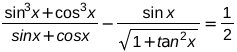
Prove the following:

Q4. Short questions (Attempt any 9 of 13 · 9 × 2 = 18)
Find the Find the domain and range of the following vector-valued functions:
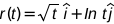
Given
 , construct r(t).
Find the first-order derivatives of the following vector-valued functions with respect to t.

A Ferris wheel of radius 20 m rotates with an angular speed of 0.2 rad/sec.
(a) Construct its position vector r(t)
(b) Find the passenger's velocity at t =10sec
(c) Show that the acceleration is centripetal (toward the center)Find the first-order derivatives of the following vector-valued functions with respect to t.

A quarterback throws a football with a position vector
 .
(a) Find the time of flight before it hits the ground.
(b) What is the maximum height reached?
(c) At which time did football reach its maximum height?Find the first-order derivatives of the following vector-valued functions with respect to t at the specified values of t.

Determine which of the following functions are scalar functions or vector-valued functions. Give appropriate reasoning to support the answer:

Find the velocity, acceleration, speed, and direction of motion at a specified value of 1. Interpret the results by describing the particle's motion at that instant, including how fast and in what direction it is moving, whether it is speeding up or slowing down, and how its path is curving.

Find the first derivative of
 .
Find the first-order derivatives of the following vector-valued functions with respect to t at the specified values of t.

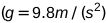
A cannonball is fired from the ground at an angle
 with an initial velocity of 100 m/s. Assuming gravity acts downward
 and neglecting air resistance,
(a)Formulate the position vector r(t) of the cannonball as function of time.
(b) Find the velocity vector at t = 5 sec.
(c) Determine the time of the flight (when the cannonball hits the ground).
Determine which of the following functions are scalar functions or vector-valued functions. Give appropriate reasoning to support the answer:
