Your school name
2nd Year Mathematics Chapter 3 Test2nd Year · Mathematics · Punjab (PTB)
Q1. Multiple choice questions (Attempt all · 10 × 1 = 10)
The value of a definite integral is always a:
What is the primary objective of using a trigonometric substitution in integration?
The rule that corresponds to the Product Rule for differentiation is called:
What is the process of recovering a function F from its derivative f called?
The line about which a plane region is revolved to generate a solid is called the:
The net signed area will be zero when:
Which pair of identities is used to simplify the expressions after substitution?
The mnemonic LIATE is used as a guideline to choose the:
According to the LIATE rule, which type of function comes first between Algebraic (A) and Trigonometric (T) functions?
What can be calculated using integration to find the space occupied by solids of revolution?
Q2. Short questions (Attempt any 6 of 8 · 6 × 2 = 12)
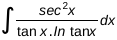
Evaluate the following integrals:
A patient receives an IV bolus dose of a drug. The concentration in the blood is modeled by
 where t is the time in hours since that does was taken. the minimum effective concentraction (MEC) is 3 mg/L. The drug is considered effective if total AUC in a 24-hour period is at least 150 mg-h/L. Find the time T (in hours) when the concentration reaches the MEC.
Evaluate the following:

A patient is given an intravenous dose oof an antibiotic. The concentration in the bloodstream over time is modeled by:
 where t is an hours. Find the total drug exposure (AUC) from t=0 to t=6 hours.
Evaluate the following integrals: Evaluate:

Evaluate

Write down the product rule of differentiation and show how it is used to start the derivation of integration by parts.
Sketch the region bounded by the given curves and find the area of the region:
