Your school name
2nd Year Mathematics Chapter 7 Test2nd Year · Mathematics · Punjab (PTB)
Q1. Multiple choice questions (Attempt all · 10 × 1 = 10)
Which pair of physical quantities consists entirely of scalar quantities?
Which branch of mechanics describes the motion of objects without considering the causes of motion?
A particle is projected vertically upwards with a velocity of 100 m/s, and another is let fall from a height of 200 m at the same time. At what height from the ground will they meet? (take g=9.8 m/s2)
A particle starts from rest and accelerates uniformly to attain a velocity of 30 km/h in (5 seconds. Find the distance travelled by the particle in the last three seconds.
The acceleration of a particle is given by
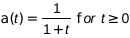 If the velocity is 0 m/s when t=0, find the velocity at t=5 seconds.
The rate of change of displacement with respect to time in a specified direction is known as:
A vehicle moving with a speed of 36 km/h is stopped by applying brakes and comes to rest in 10 seconds. What is its retardation?
Physical quantities that are completely described by magnitude only, without any direction, are called:
A train moving at 54 km/h accelerates uniformly to 90 km/h in 20 s. What is the distance covered by the train during this time?
The motion of a particle along a straight line is defined as:
Q2. Short questions (Attempt any 6 of 8 · 6 × 2 = 12)
The motion of a robotic arm moving along a straight track is described by the velocity function:
 where v(t) is in meters per second and t is the time in seconds, valid for
 . Find the distance travelled by the arm.
A ball is thrown vertically upward with a velocity of 20 m/s. Find, the maximum height reached, and the time taken to return to the thrower's hand.
A ball is thrown vertically upward with a speed of 20 m/s. Find the maximum height attained an the time to reach the maximum height.
A cyclist rides in a straight line for 20 minutes. He then stops and waits for 30 minutes, after which he return in a straight line tio the starting point in 10 minutes. (image) shows the displacement time graph for his journey. (a) calculate the average velocity for each stage of the journey in km/h. (b) Calculate the average velocity for the whole journey. (c) Find the average speed for the whole journey.
A car accelerates from 10 m/s to 30 m/s in 4 seconds. Find the distance covered during this time.
(image) is the velocity time graph for a cyclist travelling in a straight line. (The time is in minutes and velocity is in meters per minute). (a) Calculate te total displacement of the cyclist from his starting position at the end of the 12 minute. (b) Determine the uniform deceleration during the final 4 minutes of motion.
Let (equation) be the position of a particle movine along s straight line at any time t, where x is in meters and t is in seconds. Find the velocity and the speed of the particle at any time t and at t= 1 seconds.
Find the position and the velocity of a particle moving along a straight line at any time t seconds, given that it starts rest at t=0 and is subject to an acceleration a(t)=t2 +cost