Your school name
1st Year Chemistry Chapter 10 Test1st Year · Chemistry · Punjab (PTB)
Q1. Multiple choice questions (Attempt all · 10 × 1 = 10)
For the half-reaction if the concentration of
 , if the concentration of M n + ions is decreased below 1 M at 298 K, how will the actual electrode potential (E) change?
1 Faraday of electricity deposits:
Eo values help us to determine:
When a non spontaneous redox reaction takes place at the expense of electricity the process is called:
Voltage of voltaic cell is:
When fused PbBr2is electrolyzed:
The activity series of metals arranges metals in order of their:
If E deg cell is positive, what does it tell us about the cell reaction?
An oxidizing agent is a substance which brings about:
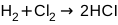
Which of the following is an example of a disproportionation reaction?



Q2. Short questions (Attempt any 6 of 8 · 6 × 2 = 12)
Why electrode potential of Cu is called reduction potential?
State the value of Avogadro's constant and Faraday's constant.
What is electrolysis?
Why is the standard hydrogen electrode used in Eº value comparisons?
What is standard hydrogen electrode (SHE)?
State Faraday's First Law of Electrolysis.
How does light energy cause the generation of electricity in a photovoltaic cell?
How can Eº values help predict redox reactions?
Q3. Long questions (Attempt any 2 of 3 · 2 × 4 = 8)
Calculate the electrode potential for a zinc electrode immersed in a 0.010 mol dm-3 solution of zinc sulfate (ZnSO4) at 298 K. The standard electrode potential (E°) for
 is -0.76 V. (Gas constant, R = 8.31JK-1mol-1,Faraday constant, F = 96500C mol-1)
What is meant by Standard Hydrogen Electrode (SHE)? How it is used to measure the electrode potential of another electrode?
A constant current of 2.00 A is passed through a solution of copper(II) sulfate (CuSO4 ) for 30.0 minutes. Calculate the mass of copper deposited at the cathode. (Molar mass of Cu = 63.5 g mol-¹, Faraday constant, F = 96500Cmol-1)