Your school name
1st Year Chemistry Chapter 13 Test1st Year · Chemistry · Punjab (PTB)
Q1. Multiple choice questions (Attempt all · 10 × 1 = 10)
AgNO3 forms a precipitate with a halide ion due to formation of:
Halide ion that reacts with concentrated H2SO4 to release HCl gas?
Which silver halide dissolves only in concentrated ammonia?
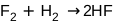
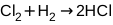
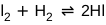
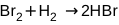
Which of the following reactions is reversible?
Which of the following halide ions does not cause the release of brown vapors when treated with concentrated H2SO4?
Which halogen has the lowest tendency to gain electrons?
How does the acidic strength of hydrogen halides change as you move down the group?
The halogen that reacts explosively with hydrogen at room temperatureis:
Which factor decreases from HF to HI?
The product formed when chlorine reacts with cold, dilute NaOH is:
Q2. Short questions (Attempt any 6 of 8 · 6 × 2 = 12)
Why does iodine sublimate on heating instead of melting?
The ionic equation for a reaction is:
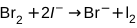 .Explain which species is oxidized in this reaction. Why?
What happens when chlorine reacts with cold, dilute sodium hydroxide?
Why is Cl-Cl bond stronger than F-F bond despite fluorine being smaller?
What is meant by bond strength in halogen molecules?
Why does iodine have the weakest bond among halogens?
What causes the F-F bond to be weaker than expected?
What is meant by oxidizing agent?
Q3. Long questions (Attempt any 2 of 3 · 2 × 4 = 8)
Explain the process of chlorination in water purification. Also explain the role of active species formed during chlorination and factors affecting chlorination. How it is regulated?
Describe and explain the relative thermal stabilities of the halogen hydrides in terms of bonds strength.
Discuss the reducing power of halide ions with relevant reactions. Also explain the factors affecting it.