Your school name
1st Year Chemistry Chapter 8 Test1st Year · Chemistry · Punjab (PTB)
Q1. Multiple choice questions (Attempt all · 10 × 1 = 10)
Which type of equilibrium involves a change of state?
Which statement is true about a reversible reaction at equilibrium?
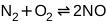
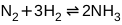
Kc = 0.040 at 450oC for the given reaction, evaluate Kp for the reaction.

What causes equilibrium concentrations to remain constant macroscopically?
When BiC/3 reacts with H2O white ppt of BiOC/ is formed
 . The white ppt disappears when
Which of the following reactions will be favoured to the forward direction at low pressure:
In a closed system at equilibrium, which event continues to occur at the particle level?
The value of equilibrium constant can predict:
At equilibrium, which of the following changes occur in concentration?
Which statement best describes chemical equilibrium?


Q2. Short questions (Attempt any 6 of 8 · 6 × 2 = 12)
Why does changing the concentration of a substance not alter the value of the equilibrium constant?
The change of volume disturbs the equilibrium position for some of the gas phase reactions but not the equilibrium constant.
How can you experimentally determine if a system is at equilibrium?
Why are microscopic events considered continuous even when a reaction appears complete?
State law of mass action.
Why ice at 0 oC can be melted by applying pressure without supply of heat from outside?
Reversible reaction attains the position of equilibrium which dynamic in nature and not static.Explain it.
In an exothermic reversible reaction, what will be the effect of increasing tempera the position of equilibrium and why?
Q3. Long questions (Attempt any 2 of 3 · 2 × 4 = 8)
Write down the Kc for the following reactions. Suppose that the reaction mixture in all the case is ‘V’ dm-3 (i) CH3COOH + CH3CH2OH (eq) CH3COOC2H5 + H2O (ii) 2HI (eq) H2 + I2 (iii) N2 + 3H2 2NH3
Write the expressions for Kc for the following reactions: (i) Sn2+(aq)+2Fe3(aq) (eq) Sn4+(aq) + 2Fe2+(aq) (ii) Ag1+(aq) + Fe2+(aq) (eq) Fe3+(aq) + Ag(s) (iii) N2(g) + O2(g) (eq) 2NO(g) (iv) 4NH3(g) + 5O2(g) (eq) 4NO(g) + 6H2O(g) (v) PCl5(g) (eq) PCl3(g) + Cl2(g)
The equilibrium constant for the reaction between acetic acid and ethyl alcohol is 4. A mixture of 3 moles of acetic acid and 1 mole of hole of ethyl alcohol is allowed to come to equilibrium. Calculate the amount of ethyl acetate present at equilibrium.