Your school name
2nd Year Mathematics 1st Quarter Book Paper2nd Year · Mathematics · Punjab (PTB)
Q1. Multiple choice questions (Attempt all · 12 × 1 = 12)
The value of a definite integral is always a:
The logarithmic function y=loga x is continuous for:
When finding the global extrema of a function on a closed interval [a,b], at which points should you first evaluate the function?
What is the primary objective of using a trigonometric substitution in integration?
A sound has an intensity of
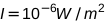 and a reference intensity of
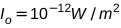 Find the sound level in decibels (dB):
Find
 for the parametric equations x=sin2 t and y= cos 2t:
- =-2
- =2
- = - tan t
- =- 4sint cot t
The rule that corresponds to the Product Rule for differentiation is called:
Which of the following simplifies to sech2 x?
Differentiation will be applied to identify which behavior of functions?
What is the process of recovering a function F from its derivative f called?
The modulus or absolute value of any real number is always:
What is the approximate value of the mathematical constant e used in the natural exponential function?
Q2. Short questions (Attempt any 8 of 12 · 8 × 2 = 16)
Using the second derivative test, find local extreme values of the following function:

Is the following function is transcendental?

Evaluate the following integrals:
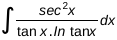
Find
 if
 .
Define the term "Shifting of Graphs".
A patient receives an IV bolus dose of a drug. The concentration in the blood is modeled by
 where t is the time in hours since that does was taken. the minimum effective concentraction (MEC) is 3 mg/L. The drug is considered effective if total AUC in a 24-hour period is at least 150 mg-h/L. Find the time T (in hours) when the concentration reaches the MEC.
Find
 if:

Solve the equation:

Evaluate the following:

Derive the formula for the derivative of the following function w.r.t. x: sec x
Let
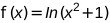 . Find the function obtained after: a vertical stretch by factor 2.
A patient is given an intravenous dose oof an antibiotic. The concentration in the bloodstream over time is modeled by:
 where t is an hours. Find the total drug exposure (AUC) from t=0 to t=6 hours.