Your school name
2nd Year Mathematics 3rd Quarter Book Paper2nd Year · Mathematics · Punjab (PTB)
Q1. Multiple choice questions (Attempt all · 12 × 1 = 12)
Which pair of physical quantities consists entirely of scalar quantities?
In the field of cryptography, nonlinear equations play an important role in designing:
The domain of the inverse function f-1 is the ....... of f.
Which branch of mechanics describes the motion of objects without considering the causes of motion?
Geometrically, the straight line drawn through the points (a, f(a)) and (b, f(b)) in the Regula-Falsi method is called a:
Trigonometric functions are generally not one-to-one on their entire domains because they are:
A particle is projected vertically upwards with a velocity of 100 m/s, and another is let fall from a height of 200 m at the same time. At what height from the ground will they meet? (take g=9.8 m/s2)
For the equation
 what is the functional value f(1) using radian mode?
The inverse of sin x is written as:
A particle starts from rest and accelerates uniformly to attain a velocity of 30 km/h in (5 seconds. Find the distance travelled by the particle in the last three seconds.
Geometrically, the Newton-Raphson method finds the next root approximation by extending what line from the current curve point to the x-axis?
If y= sin-1 x, then:
Q2. Short questions (Attempt any 8 of 12 · 8 × 2 = 16)
The electrical activity of the heart is represented by a variable x, which measures the signal strength of the heartbeat. At steady-state, the signal satisfies the nonlinear equation:

The motion of a robotic arm moving along a straight track is described by the velocity function:
 where v(t) is in meters per second and t is the time in seconds, valid for
 . Find the distance travelled by the arm.
Prove the following:

Find the real roots of the following functions correct to two decimal places using the graphical method, by finding some interval of sign change.

A ball is thrown vertically upward with a velocity of 20 m/s. Find, the maximum height reached, and the time taken to return to the thrower's hand.
Prove that
 .
Find the real roots of nonlinear equations using the Newton-Raphson method.
 accurate to 4 decimal places.
A ball is thrown vertically upward with a speed of 20 m/s. Find the maximum height attained an the time to reach the maximum height.
Find the domain of the following functions:
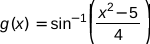
Find the real roots of the following functions correct to two decimal places using the graphical method, within the specified interval of sign change.

A cyclist rides in a straight line for 20 minutes. He then stops and waits for 30 minutes, after which he return in a straight line tio the starting point in 10 minutes. (image) shows the displacement time graph for his journey. (a) calculate the average velocity for each stage of the journey in km/h. (b) Calculate the average velocity for the whole journey. (c) Find the average speed for the whole journey.
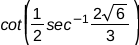
Without using calculator find the value of the following: